
The next AI bottleneck may be electricity and copper, not chips
The AI rally is not only a semiconductor story. This beginner guide explains why data-center power demand, grids, copper, utilities, and Big Tech costs may become the next market test.
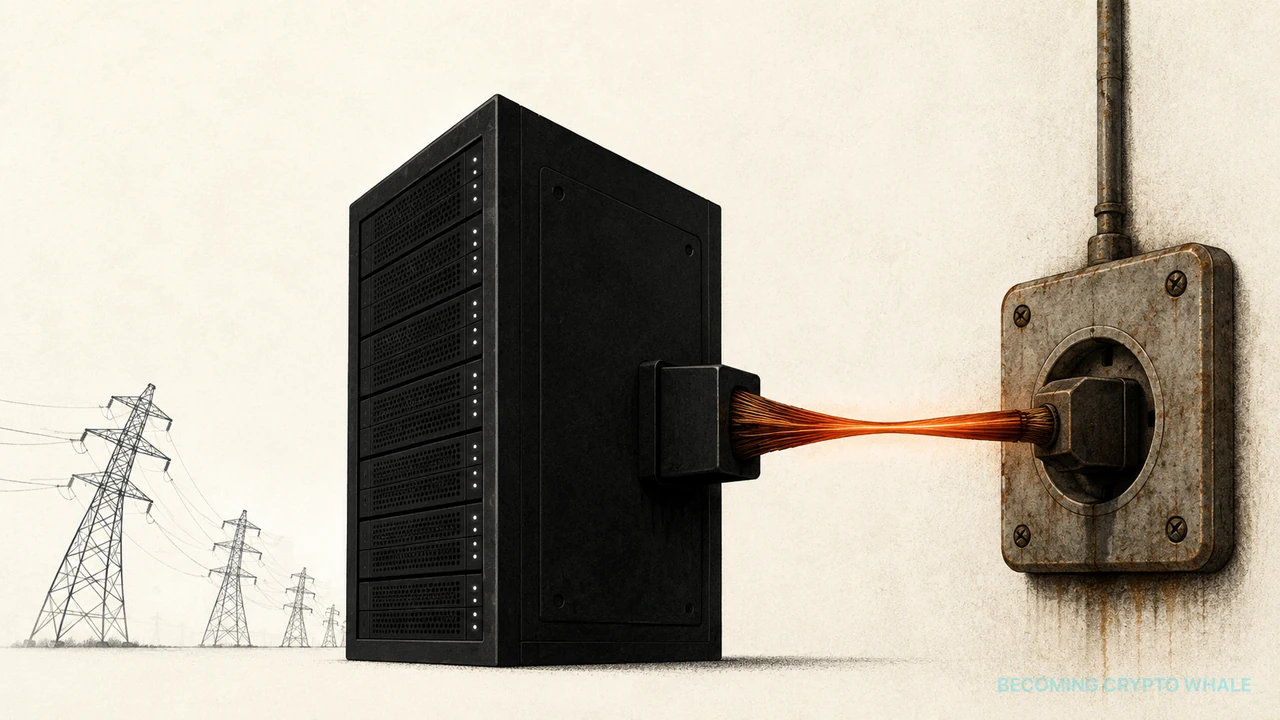
Most investors begin the AI story with GPUs and semiconductors. That is a reasonable starting point. But an AI data center cannot run on chips alone. It also needs electricity, cooling, transformers, transmission lines, copper cable, and long-term power contracts.
So the next question is simple.
If AI demand keeps growing, can the bottleneck move from chips to power infrastructure?
This is not only an industrial question. It matters for beginner investors because the market eventually tests whether fast revenue growth can be supported by real-world capacity.
An AI data center is a power-hungry factory
An AI data center is not just an office building with servers. The servers calculate continuously, the cooling system removes heat, and the electrical system has to deliver stable power without interruption.
The International Energy Agency has highlighted the surge in data-center electricity use and the scramble for solutions as grid bottlenecks tighten. When AI server demand concentrates in one region, the problem becomes local: grid connection queues, transmission investment, and utility pricing.
For investors, the lesson is straightforward. Even if demand for AI services is strong, delayed power connections can slow data-center expansion. If grid investment accelerates, the AI cycle can spread beyond semiconductors into electrical equipment, utilities, construction, and commodities.
Copper is the hidden material behind AI
Copper is basic infrastructure for electrification. It is used in power cables, transformers, motors, cooling systems, transmission networks, and data-center wiring. AI may look like software from the outside, but in the physical world it depends on metal and electricity.
S&P Global has described AI and data centers as an important new source of copper demand. The point is not to predict the exact copper price. The point is to understand that the AI rally is connected to real assets, not only chip design.
An easy way to remember it:
GPUs are close to the brain of AI. Electricity and copper are closer to the blood vessels.
If the vessels are constrained, the body cannot move faster just because the brain is powerful.
Utilities can look less defensive and more like growth infrastructure
Utilities are usually treated as defensive stocks because people need electricity regardless of the economy. But when data centers create large new demand, some utilities can start to look like critical growth infrastructure.
That does not mean every utility stock is attractive. Utilities are regulated. Power plants and transmission lines take years to build. If data-center demand pushes consumer electricity bills higher, political resistance can follow.
Reports that PJM, a major U.S. power-grid operator, is considering market changes fit this larger picture. Once data centers affect power prices and supply reliability, investors have to watch grid rules, not just AI headlines.
Big Tech costs matter too
AI infrastructure is an opportunity for Big Tech, but it is also a cost. Microsoft, Amazon, Google, Meta, and other large platforms can spend heavily on data centers before the revenue fully arrives.
At first, markets usually focus on growth. Later, they ask harder questions.
Is data-center spending becoming revenue?
Are electricity and cooling costs pressuring margins?
Are power-connection delays slowing cloud expansion?
Is the AI supply chain broadening beyond chips?
The answers will determine whether the AI rally stays healthy or becomes too narrow.
A beginner checklist
When you look at the AI power theme, start with structure, not tickers.
Check whether power demand is real. Announced projects are not the same as connected projects.
Check for grid bottlenecks. Transformer shortages, transmission delays, or permitting issues can slow data-center growth.
Watch copper and electrical-equipment prices. Rising prices can signal demand, but they also raise project costs.
Watch regulation and utility bills. If households and businesses feel the cost, the political story can change.
Finally, compare AI revenue with AI costs. A strong AI story is more durable when infrastructure spending converts into profitable usage.
The takeaway
If you only watch chips, you see the most visible part of the AI rally. The next stage may be about the power grid, copper, cooling, utilities, and the speed of data-center connections.
The simplest summary is this:
AI sounds digital, but its next bottleneck may be physical.
So when you read AI news, do not stop at GPU sales. Ask where the data center will be built, how much power it has secured, whether the grid can handle it, and whether copper and electrical equipment are becoming the new constraint.