
Bitcoin Wants to Break $80,000, but Rates Are Pressing on the Ceiling
Bitcoin is holding near the $80,000 area, but ETF flows, options positioning, and elevated long-term yields have not yet confirmed a clean breakout. The real test is liquidity, not the headline price.
This article is based on information available as of 00:00 UTC on May 22, 2026.
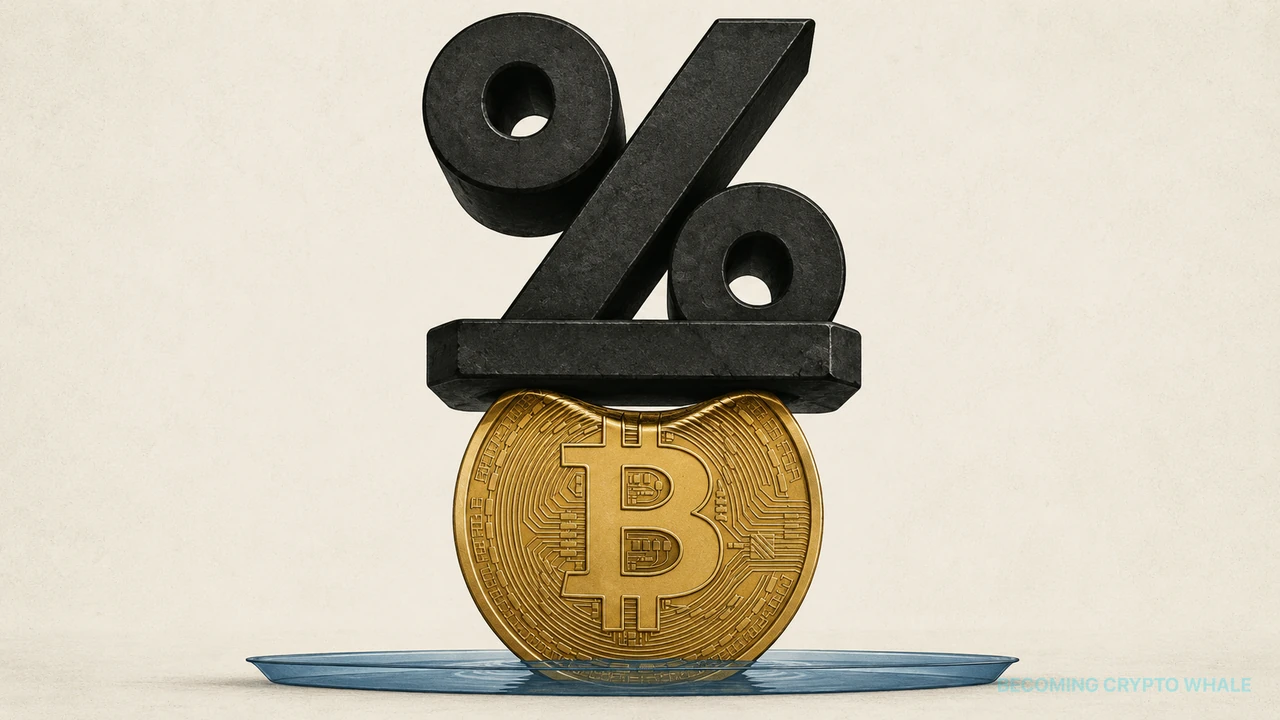
Bitcoin wants to break $80,000. Rates are pressing on the ceiling.
The price action can look resilient. Bitcoin has held near the $80,000 area despite high rates, oil volatility, and a cautious Federal Reserve. But holding a level and confirming a new uptrend are not the same thing.
The key issue is not price. It is liquidity.
The question is not whether bitcoin can touch $80,000. The question is whether enough money is entering to support that price.
Price is holding, but flows are not yet convincing
CoinDesk reported that bitcoin's onchain metrics have improved, but ETF and institutional demand remain mixed. U.S. spot bitcoin ETFs saw a $635 million single-day outflow on May 13, while corporate buying volume was down 80% compared with the prior month.
That matters because a durable bitcoin rally needs real flows behind the move. If price rises while ETF and institutional demand weaken, the market has to ask who keeps buying the next leg.
Bitcoin has a powerful long-term scarcity narrative. But in the short run, flows validate price.
The gamma trap near $82,000
Options positioning is another issue. CoinDesk cited Glassnode data showing nearly $2 billion in short-gamma options positions clustered around the $82,000 strike.
That setup can pull price toward a level because market-maker hedging amplifies the move. But it does not necessarily prove durable spot demand. Gamma can push price higher, then turn the same zone into resistance after the squeeze fades.
The more important signal is what happens after a breakout: ETF inflows, spot volume, and lower long-term-holder selling pressure need to confirm the move.
The Fed and long yields are the ceiling
The FOMC minutes released this week were not an easy backdrop for risk assets. The Fed kept the funds target range at 3.5% to 3.75% at its April meeting and continued to describe inflation as elevated. A clear path to quick easing was not visible.
Long-term yields matter too. AP reported that the 10-year Treasury yield fell to 4.57% from 4.67% on May 20, helping stocks rebound. The reverse is also true: if yields climb again, risk assets can lose support quickly.
Bitcoin is not a bond. But investors compare alternatives. When long-dated government debt offers high yields, volatile assets have to work harder to attract incremental capital.
Is bitcoin an independent asset or a liquidity asset?
Long term, bitcoin has a strong case as a scarce asset outside the fiat system. Supply is limited, and long-term holders remain part of the structure.
Short term, however, bitcoin often trades like a liquidity asset. Dollar liquidity, real rates, ETF flows, and leverage can dominate the price path. When the market starts trading the Fed and Treasury yields again, bitcoin cannot fully ignore it.
That is the tension today. The long-term story is strong, but the short-term breakout still needs liquidity.
What to watch
First, ETF flows. A price breakout with renewed ETF inflows is more convincing than a price breakout alone.
Second, spot activity above the $82,000 area. The market needs to distinguish real demand from gamma-driven movement.
Third, long-term Treasury yields. If 10-year and 30-year yields return to recent highs, bitcoin can face risk-asset pressure.
Fourth, Fed language. A Fed that worries more about sticky inflation is not a friendly backdrop.
Fifth, long-term-holder selling. If profit-taking rises too much into strength, breakouts can fade quickly.
Conclusion
This is not a bearish argument against bitcoin. Bitcoin has shown resilience in a difficult macro environment.
But resilience and confirmation are different.
Bitcoin near $80,000 is taking a liquidity test, not just a price test. The quality of the breakout improves if ETF flows return, long yields stabilize, and the Fed avoids moving more hawkish.
Bitcoin wants to break $80,000. To stay above it, the rate ceiling has to come lower.