
Are ETFs really safer than individual stocks?
ETFs can reduce single-company risk, but they are not automatically safe. A beginner guide to index ETFs, sector ETFs, theme ETFs, leveraged ETFs, and hidden concentration.
One of the most common lines beginners hear is:
"If individual stocks are too hard, buy an ETF."
There is some truth in that. An ETF can hold many assets at once, and it can reduce the risk of putting all your money into one company.
But this idea often creates a dangerous shortcut.
An ETF can be less risky than a single stock, but not every ETF is safe.
The key idea is simple.
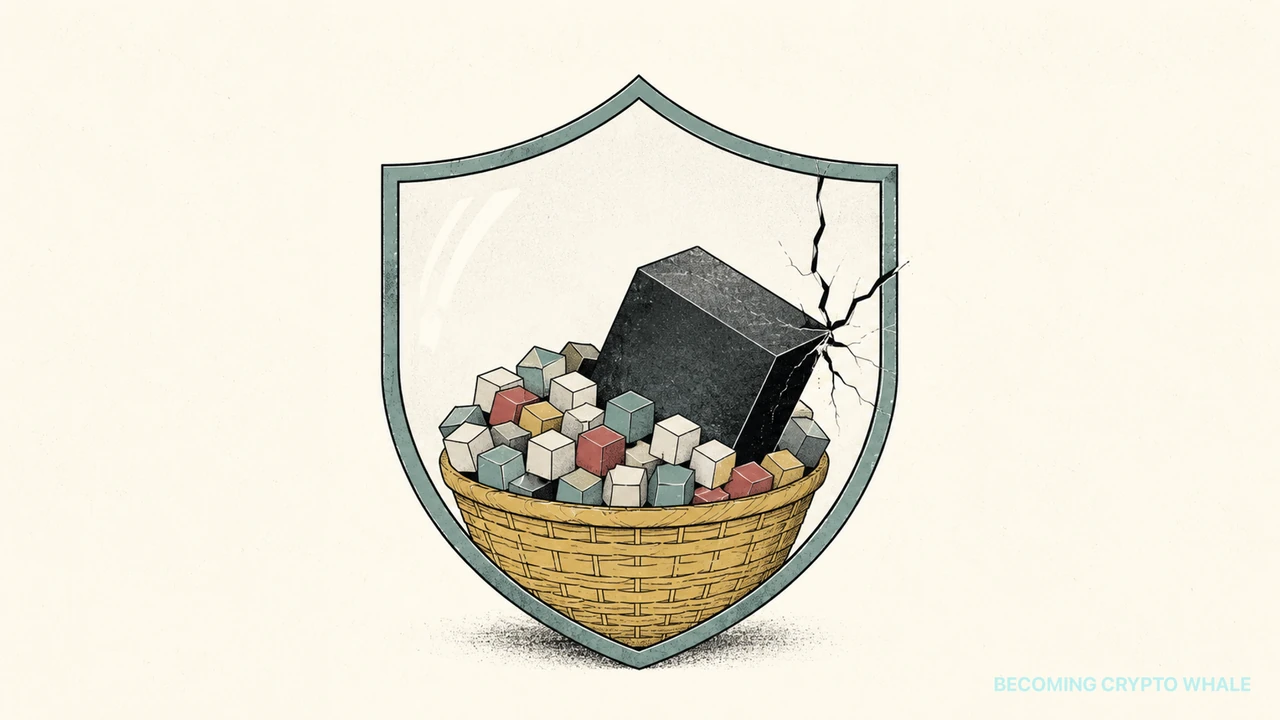
ETF is the wrapper. The risk comes from what is inside the wrapper.
Do not assume safety just because the product is called an ETF. An S&P 500 ETF, a semiconductor ETF, a high-dividend ETF, and a leveraged ETF can all be ETFs, but their risks are very different.
An ETF is a container for assets
ETF stands for exchange-traded fund. It is a fund that trades on an exchange like a stock.
The SEC's Mutual Funds and ETFs guide explains that many investors can use certain mutual funds or ETFs to achieve diversification at a lower cost than buying individual stocks or bonds directly.
The important word is "can."
It does not mean every ETF is automatically diversified in a useful way.
ETFs can include:
- broad U.S. stock index ETFs
- technology-focused ETFs
- semiconductor ETFs
- bank ETFs
- dividend ETFs
- commodity or bond ETFs
- leveraged and inverse ETFs
All of these may be ETFs, but they do not carry the same risk.
So the first question should not be "Is it an ETF?" The first question should be "What does this ETF own?"
Why ETFs are often called safer than individual stocks
The main reason is diversification.
If you buy one stock, you are exposed to that company's earnings, management, lawsuits, regulation, product failures, accounting problems, and competitive position. One company-specific problem can hurt your whole position.
An ETF that holds many companies can reduce the impact of any single company.
For example, in a broad index ETF with hundreds of large companies, one company missing earnings does not usually destroy the entire fund. Other companies can cushion the impact.
That is the power of diversification.
But diversification does not eliminate loss. It spreads sources of risk.
If the whole market falls, a broad stock ETF can fall too. If rates rise sharply, recession fears increase, or valuation multiples compress across equities, an ETF can still decline.
An ETF is not principal protection.
Broad ETFs and narrow ETFs are different
The first thing to check is scope.
A broad ETF holds many industries and many companies. A broad U.S. large-cap index ETF may include technology, financials, healthcare, industrials, consumer sectors, and more.
A narrow ETF focuses on a sector or theme. Semiconductor ETFs, AI ETFs, electric vehicle ETFs, biotech ETFs, and bank ETFs fall into this category.
A narrow ETF can rise strongly when its theme works. But if the theme weakens, many holdings can fall together.
A semiconductor ETF may be more diversified than one semiconductor stock. But if the semiconductor cycle turns down, many stocks inside the ETF can decline at the same time.
"Many holdings" and "well diversified" are not the same thing.
If the holdings share the same risk, the real diversification may be much smaller than it appears.
Market-cap weighted ETFs can be dominated by large stocks
Beginners often miss the importance of weighting.
An ETF with 100 holdings does not necessarily hold 1% of each company.
Many index ETFs are market-cap weighted. Larger companies receive larger weights.
S&P Dow Jones Indices describes the S&P 500 as a leading gauge of U.S. large-cap equities and a broad measure of available U.S. market capitalization. Even broad indexes can have heavier exposure to the largest companies.
This structure has advantages. It naturally reflects the growth of the biggest companies in the market.
But it also creates concentration risk. You may think you bought broad exposure, but the ETF can still be sensitive to a handful of mega-cap technology or growth stocks.
That is why investors should check the top holdings and the weight of the top 10 positions.
Theme ETFs can be riskier than their names suggest
Theme ETFs often look attractive to beginners.
AI ETF, robotics ETF, electric vehicle ETF, space ETF, clean energy ETF: the name makes the investment idea easy to understand.
The problem is that an easy story can already be expensive.
When many investors chase the same theme, the stocks inside the ETF may already reflect high expectations. If earnings fail to justify those expectations, rates rise, or policy support weakens, the theme can cool quickly.
Also, a theme ETF may include companies of very different quality. Some may already generate strong profits. Others may still be early-stage companies with more promise than earnings.
Beginners should ask:
Not "Do I like this theme?"
But "Are the companies inside this ETF actually earning money?"
Leveraged ETFs are not ordinary ETFs
Leveraged and inverse ETFs deserve extra caution.
A leveraged ETF is designed to target two or three times the daily move of an index. An inverse ETF is designed to move opposite an index.
These products are not the same as ordinary long-term index ETFs.
FINRA's Exchange-Traded Products guide explains that some ETPs can provide cost-effective diversification, while others do not. It also warns that leveraged and inverse products often pursue daily objectives and can be risky long-term or even medium-term investments.
With leveraged ETFs, even if you are right about direction, volatility can produce results that differ from simple two-times or three-times index returns over longer periods.
For beginners, holding a leveraged ETF for the long term just because it is an ETF can be dangerous.
These products usually require a clear strategy, close monitoring, and an understanding of daily reset risk.
A checklist before buying an ETF
Look at the structure before the ticker.
First, what index or strategy does it follow?
Second, what are the top 10 holdings and their weights?
Third, is the ETF concentrated in one sector or theme?
Fourth, what are the fees and trading costs?
Fifth, is trading volume sufficient, and is the bid-ask spread reasonable?
Sixth, does it use leverage, inverse exposure, or derivatives?
Seventh, what were past drawdowns, not just past returns?
Eighth, can you explain in one sentence why you own it?
If an ETF fails this checklist, familiarity is not enough.
The simple takeaway
ETFs can help reduce risk compared with buying one stock. Broad index ETFs can reduce the risk of betting everything on one company.
But ETF does not mean safe.
ETF is a container. The risk depends on what it holds, how concentrated it is, and what structure it uses.
Beginners can remember this:
ETFs can reduce single-company risk, but they do not remove market risk or structural risk.
ETF investing does not start by memorizing tickers.
It starts by understanding which market risk the ETF actually owns.