
KOSPI 7000: The AI Chip Rally Built on Samsung and SK hynix
Korea's equity rally is not just a broad market rebound. It is a concentrated bet on AI memory, HBM, Samsung Electronics, and SK hynix.
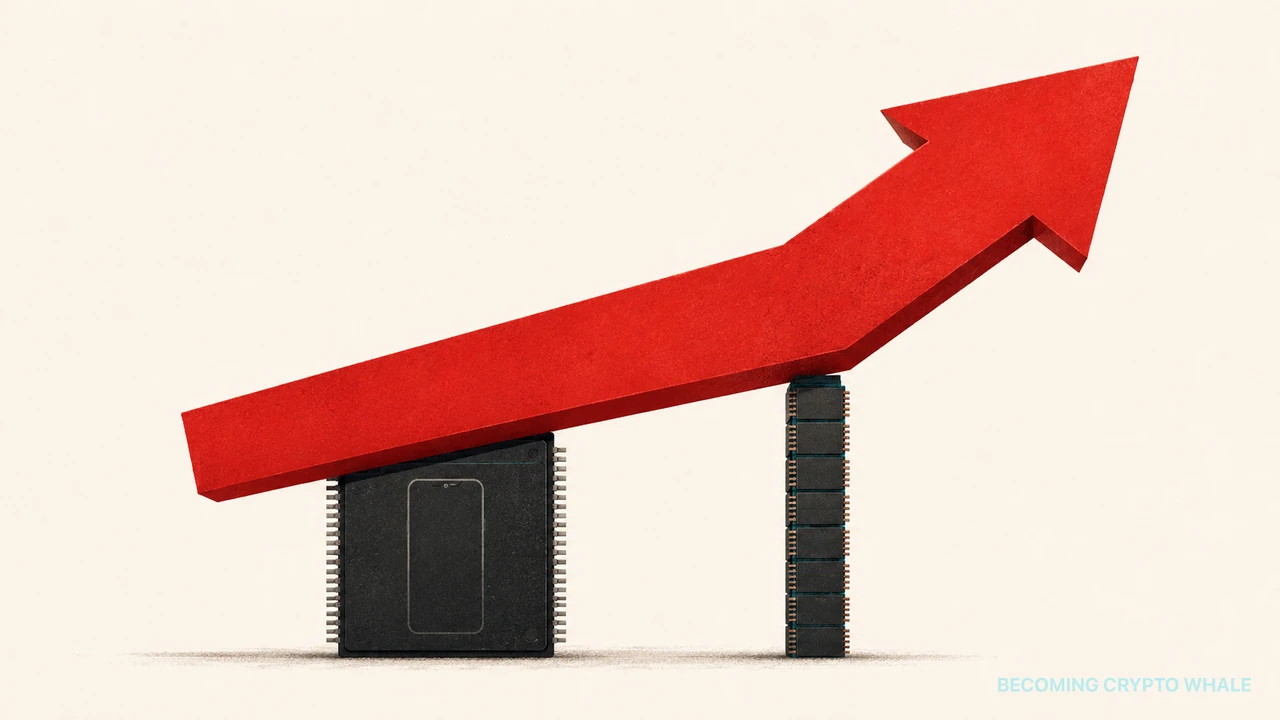
The number that defines Korea's 2026 equity market is KOSPI 7000. But the number alone is not the story.
The better question is not why Korean stocks rose. It is this:
Why is the Korean market using Samsung Electronics and SK hynix as a way to buy AI infrastructure?
On May 6, 2026, Reuters reported via MarketScreener that the KOSPI closed up 6.45% at 7,384.56 after crossing 7,000 for the first time. Samsung Electronics rose 14.4%, SK hynix rose 10.6%, and the two companies together accounted for 44% of the index's total value.
That is not a normal broad-based bull market. It is a market being lifted by one very specific thesis: AI data centers need memory, high-bandwidth memory is scarce, and Korea owns two of the most important companies in that supply chain.
This is a narrow rally, not a simple Korea recovery
There are two kinds of bull markets. In a broad rally, many sectors rise together and the average investor feels the improvement. In a narrow rally, the index rises because a small number of very large stocks carry the benchmark.
The 2026 KOSPI rally is closer to the second type.
Korea JoongAng Daily reported that Samsung Electronics and SK hynix generated 77% of the market-cap increase as the index moved from 6,000 to 7,000. Their combined weight reached 47.02% of total KOSPI market capitalization. On the day the index crossed 7,000, only 200 stocks rose while 679 fell.
That detail matters. The headline says Korea is rising. The market internals say semiconductor leadership is doing most of the work.
For investors, that changes the question. It is not enough to ask whether Korea is cheap or whether the index is strong. The real question is whether AI memory profits can keep justifying such a large share of the benchmark.
Why memory became the AI infrastructure trade
AI is not only about GPUs. GPUs perform the computation, but memory feeds those processors with data. As models grow and inference demand expands, memory bandwidth becomes a bottleneck.
That is why HBM matters. High Bandwidth Memory stacks DRAM vertically and places it close to advanced processors so data can move at very high speed. It is harder to manufacture than ordinary DRAM, requires advanced packaging and customer qualification, and cannot be scaled instantly just because demand is strong.
This gives Korea a powerful position. Samsung Electronics and SK hynix are not just cyclical memory producers in this cycle. The market is revaluing them as core suppliers to the AI infrastructure build-out.
The thesis is simple:
The larger AI becomes, the more valuable the memory layer becomes.
That does not mean the old memory cycle has disappeared. Supply can still catch up. Capital spending can still overshoot. Margins can still peak. But for now, investors are paying for a cycle that may be longer, tighter, and more profitable than a normal PC or smartphone memory rebound.
Samsung: a giant technology conglomerate being re-rated
Samsung Electronics is not a pure memory company. It includes memory, foundry, system semiconductors, smartphones, displays, TVs, and appliances. That breadth makes Samsung more diversified than SK hynix, but it also makes the investment case less pure.
The first quarter of 2026 showed where the market's attention is focused. Samsung Newsroom said Samsung posted KRW 133.9 trillion in consolidated revenue and KRW 57.2 trillion in operating profit. The Device Solutions division alone produced KRW 81.7 trillion in revenue and KRW 53.7 trillion in operating profit.
In other words, most of Samsung's quarterly profit came from semiconductors.
That is why the stock was re-rated. The market is not buying Samsung because every business line suddenly became better. It is buying Samsung because the semiconductor profit engine looks much larger than it did during the downcycle.
The risk is that Samsung remains a complicated company. Foundry competitiveness, smartphone demand, display margins, labor negotiations, capital allocation, and governance all still matter. Samsung is a bet on AI memory, but also on Korea's largest integrated technology group.
SK hynix: the cleaner HBM exposure
SK hynix is the more direct AI memory story. Its business mix is simpler, and its position in HBM made it the cleaner way to express the AI memory thesis.
The numbers were striking. SK hynix reported first-quarter revenue of KRW 52.5763 trillion, operating profit of KRW 37.6103 trillion, and a 72% operating margin. The company cited high-value products such as HBM, high-capacity server DRAM modules, and enterprise SSDs.
A 72% operating margin is not a normal manufacturing number. It shows how tight AI memory supply has become and how powerful the product mix can be when demand is concentrated in premium categories.
But the same purity creates risk. If AI memory demand slows, if competitors add supply faster than expected, or if HBM pricing turns, SK hynix has less diversification to soften the hit.
Samsung is the broader technology bet. SK hynix is the sharper AI memory bet.
What KOSPI 7000 does not tell you
KOSPI 7000 is an important milestone. It suggests that global capital is taking Korean semiconductors seriously again and that the Korea discount may be narrowing for the companies closest to AI infrastructure.
But the index level does not answer every question.
First, index strength does not mean market breadth. The larger Samsung and SK hynix become inside the benchmark, the more the KOSPI depends on two earnings streams.
Second, a good semiconductor cycle does not make every Korean company attractive. Domestic consumption, finance, platforms, biotech, and smaller caps can follow completely different cycles.
Third, AI profits can become political. A Japan Times report citing Bloomberg described debate around returning AI gains to citizens. That kind of discussion matters because extreme profits often invite tax, wage, and redistribution arguments.
Fourth, labor risk should not be ignored. Reuters via Investing.com reported tension around Samsung Electronics pay talks and bonus structures. The larger the AI profit pool becomes, the more important the question of who shares it becomes.
The checklist for investors
This is not a buy or sell recommendation. It is a framework for reading the rally.
1. HBM qualification and customer mix
In HBM, production is not enough. Customer approval and reliable high-volume supply matter.
2. Margin direction
Samsung's semiconductor margins and SK hynix's operating margin need to be watched for signs of peak profitability.
3. DRAM and NAND pricing
HBM is the headline, but the broader memory cycle still matters.
4. Capital spending and supply growth
Every memory cycle eventually depends on whether supply catches demand.
5. Foreign flows
Korea's largest chip stocks are highly sensitive to global AI and semiconductor capital flows.
6. Market breadth
If the rally spreads into equipment, materials, power infrastructure, finance, and consumer names, the market becomes healthier. If it stays inside two stocks, the index becomes more fragile.
7. Policy and labor risk
Taxes, subsidies, labor negotiations, supply-chain rules, and China restrictions can all affect the profit pool.
Conclusion: the index is higher, but the question is harder
The 2026 KOSPI rally is powerful. Samsung Electronics and SK hynix have pulled Korea back into the center of the semiconductor story, and AI data-center spending has made memory a strategic infrastructure asset again.
But the best markets require harder questions.
The important point is not simply that the KOSPI crossed 7,000. The important point is where the move came from. This is less a broad Korea recovery than a concentrated bet on AI semiconductors.
The bullish view is clear:
Korea owns a critical layer of the AI infrastructure supply chain, and the market is finally pricing that value.
The cautious view is also clear:
Too much of the index now rests on Samsung Electronics and SK hynix.
Both views can be true. The next phase depends on whether AI memory demand remains strong, HBM supply stays tight, margins hold, and the rally broadens beyond the two chip giants.
KOSPI 7000 is not the answer. It is the question:
Is Korea riding a durable AI infrastructure cycle, or has the market placed too much expectation on two semiconductor stocks?
Sources
- Reuters / MarketScreener: KOSPI breaks 7,000 as AI chip rally lifts Samsung
- Korea JoongAng Daily: Top chip stock concentration nears 50% of KOSPI market cap
- Samsung Newsroom: Samsung Electronics first-quarter 2026 results
- SK hynix: 1Q26 financial results
- Japan Times / Bloomberg: Korea citizen dividend debate around AI gains
- Reuters / Investing.com: Samsung Electronics union pay-talk risk