
SpaceX IPO: Could the Biggest Listing Ever Pull Money Out of the Market?
The SpaceX IPO is not just a space-company listing. It is a test of whether public markets can absorb Starlink cash flows, Starship and AI spending, founder control, and index-fund demand at once.
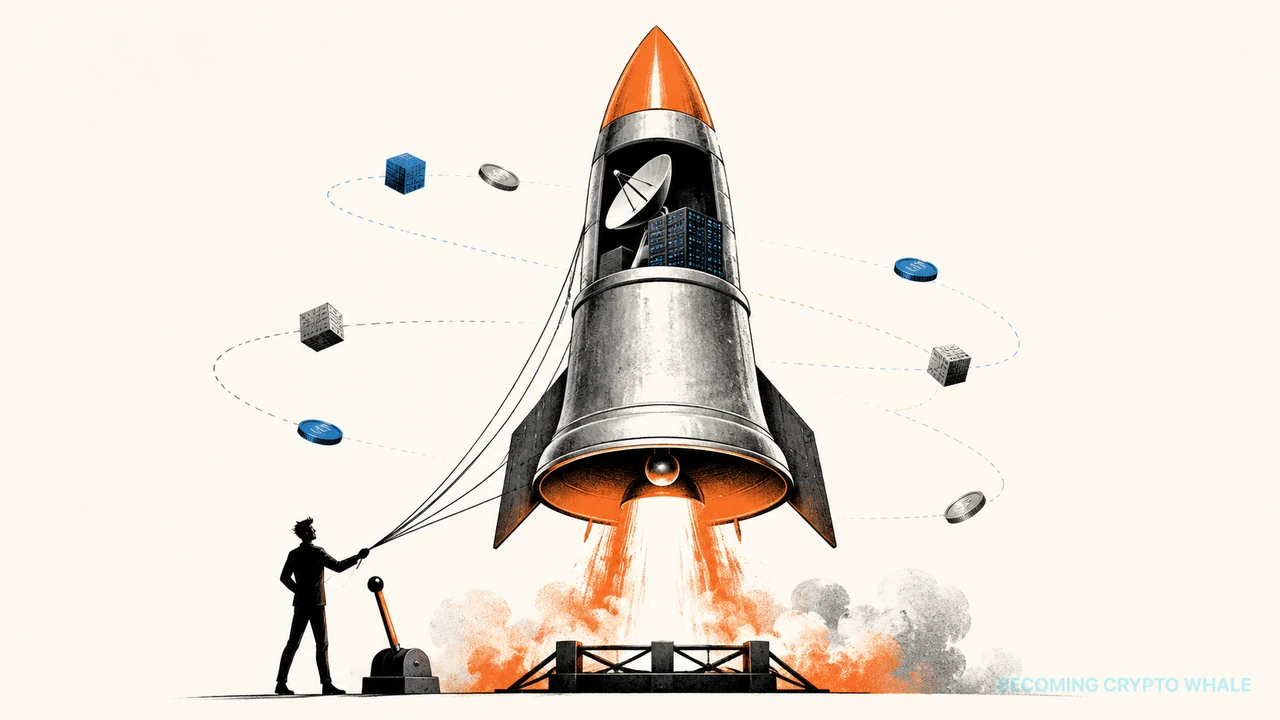
The easiest way to read the SpaceX IPO story is this:
Elon Musk's space company is finally going public.
But investors should ask a harder question:
Is the public market buying SpaceX's existing business, or funding the future that Musk wants to build?
That question matters because SpaceX is no longer just a rocket company. It combines reusable launch, Starlink satellite internet, government contracts, Starship, xAI, X, and the idea of space-based data centers into one capital-hungry business.
AP reported on April 1, 2026 that SpaceX filed preliminary paperwork to sell shares to the public. The final deal size is not public, but reported figures have included as much as $75 billion raised, which would exceed Saudi Aramco's 2019 IPO.
This is not a buy-or-sell call. The better question is why this listing has become a test for the 2026 IPO market, index rules, and public-market appetite for giant founder-led infrastructure companies.
It is not a final public prospectus yet
The first thing to separate is news from final terms.
SpaceX has reportedly submitted a confidential draft. According to the SEC's draft registration statement FAQ, IPO issuers can receive nonpublic SEC review, but they must publicly file the registration statement and drafts before a roadshow or effective date.
So the market is still working from reports and filing excerpts, not a final public prospectus.
That changes how investors should behave.
Do not treat the headline valuation as the deal. Wait for the prospectus.
Without that discipline, the SpaceX IPO becomes a mood trade, not analysis.
Why go public now?
The reason is not simply popularity. The better explanation is capital intensity.
TechCrunch reported that SpaceX could seek a valuation around $1.75 trillion and raise $75 billion. The capital needs are unusually broad: Starship development, Starlink replenishment, spectrum, and xAI compute infrastructure.
That is different from a normal growth IPO.
Many IPOs sell a fast-growing software company to the public. SpaceX is asking the public market to fund rockets, satellites, AI infrastructure, government-linked services, and long-duration space ambitions.
The key sentence is simple:
SpaceX may be a growth company, but it is also a very large capital-spending machine.
When growth and capital consumption rise together, valuation becomes much harder.
Starlink is the cash-flow center
The business investors should study first may not be rockets. It may be Starlink.
Launch is iconic, but satellite internet is closer to recurring cash flow. Starlink is the engine that could make the rest of SpaceX financeable.
Reuters reported from IPO filing excerpts that Starlink generated billions in operating profit in 2025, while the combined company swung to a consolidated loss after xAI-related spending and heavy capital investment. Reuters reported 2025 revenue of $18.67 billion, a $4.94 billion consolidated loss, and more than $20.7 billion in capital expenditure.
That creates the central investor tension.
Starlink may be the stabilizing cash-flow engine. But that cash flow may be used to support Starship, AI infrastructure, satellite replacement, and much larger future projects.
So investors need to ask:
Am I buying Starlink's earnings, or am I buying the dreams that Starlink is subsidizing?
Those are not the same investment.
Governance is not a footnote
Founder control can be useful in a company with long time horizons. It can protect ambitious projects from short-term market pressure.
But public investors still need to know how much voice they will have.
Reuters reported that SpaceX plans a dual-class structure, with public Class A shares carrying one vote and Class B shares carrying 10 votes. Musk and insiders would retain control.
That structure is common in technology. In SpaceX's case, it matters more because the company mixes rockets, Starlink, xAI, X, government contracts, and very large capital allocation decisions.
If strategy disappoints or related-party questions grow, public shareholders may have limited influence.
Index inclusion could become the second IPO
The other story is index demand.
Axios argued that mega-IPOs like SpaceX could pull money from other assets. It also reported that Nasdaq had adjusted rules to allow faster Nasdaq 100 inclusion, while S&P was considering changes for very large companies, including profitability, waiting-period, and float requirements.
That matters because index inclusion creates mechanical buyers.
If SpaceX lists near $1.5 trillion to $2 trillion, has a small float, and becomes index-eligible quickly, the stock may become a flow event as much as a fundamentals event.
The question shifts from:
Is SpaceX a good company?
to:
Who is forced to buy it, when, and how much supply is available?
What to read in the prospectus
When the public filing arrives, the checklist should be concrete.
1. Starlink revenue quality
Subscriber growth, regional profitability, hardware subsidies, and satellite replacement costs matter.
2. Starship cost and schedule
Starship can increase long-term value, but it can also absorb enormous cash.
3. xAI and X exposure
Investors need to know how much AI infrastructure spending SpaceX is carrying.
4. Government contract reliance
NASA and defense revenue can be durable, but they also bring political and regulatory risk.
5. Float and lockups
A small float can strengthen initial demand and increase volatility.
6. Voting rights
Super-voting shares limit public-shareholder influence.
7. Index eligibility
Fast inclusion can create passive demand, but passive demand is not the same as intrinsic value.
Conclusion: SpaceX is a capital-market story, not just a space story
The SpaceX IPO should not be treated as just a fascinating space-company listing.
It is a test of how much founder control, AI spending, satellite infrastructure, government revenue, index demand, and long-duration ambition public markets are willing to buy at once.
The bullish case is obvious:
SpaceX could become the defining infrastructure company of the rocket, satellite internet, AI, and orbital data-center era.
The cautious case is just as obvious:
Public investors may be buying Starlink's cash flow while funding a much larger and less proven capital plan.
That is why the SpaceX IPO matters.
It is a test of what the 2026 public market is willing to believe.